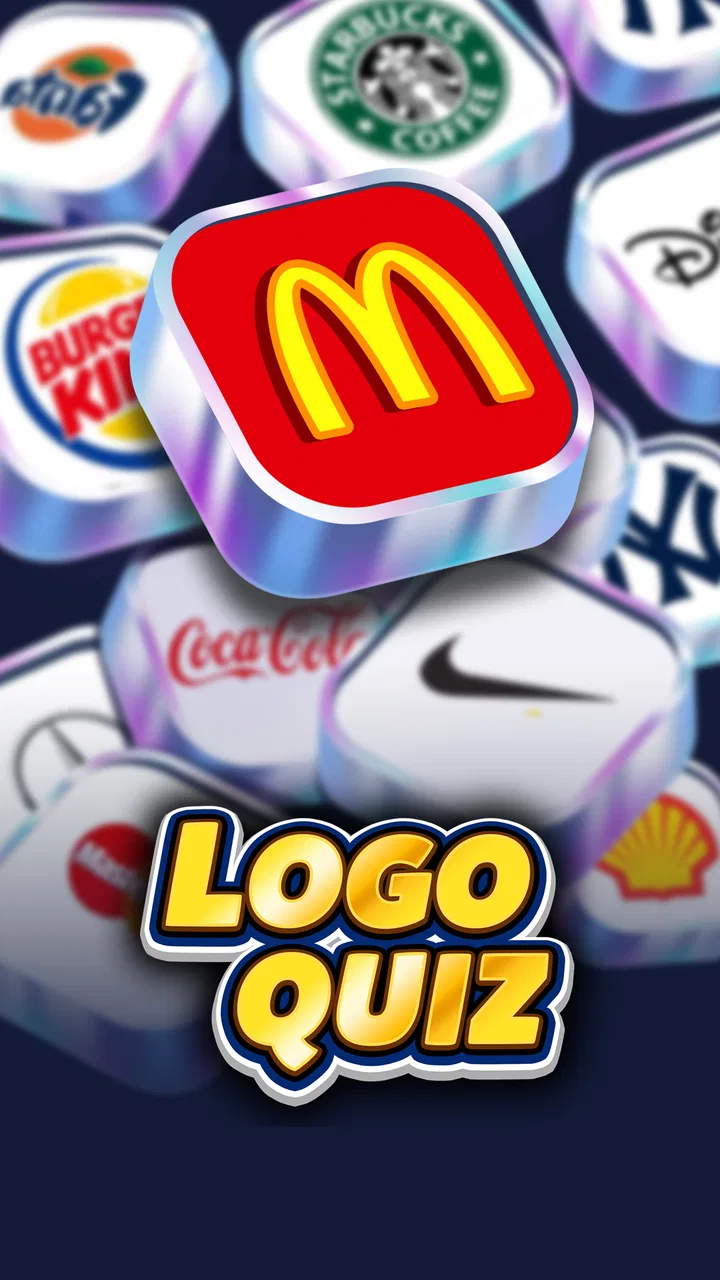
Logo Quiz - Guess Brand Trivia
- 4.8
- Rating
- 100.00K
- Installs
- Free
- Price

 Analysis by App-foxy
I usually know within the first few minutes whether a trivia game will become a useful little time-filler or disappear from my phone after one session. Logo Quiz - Guess Brand Trivia made a good first impression because its idea is immediately clear: look at a logo, think of the brand, and submit an answer. There is no complicated setup or story to learn before playing, which makes it easy to recommend when you want something light for a short break.
This is a free trivia game from April 21 Studio, listed for Everyone and available on Android devices running version 7.0 or later. It has reached over 100 thousand installs and holds a 4.9 average from around 1.1 thousand ratings, so it has clearly found an audience among people who enjoy quick brand-recognition challenges. The current version is 1.3.0, and optional in-app purchases range from $0.99 to $32.99 per item.
What the first few minutes feel like
The central appeal is recognition. A familiar symbol can feel obvious at a glance, but the game becomes more interesting when the design is partly remembered rather than instantly identified. I found myself switching between visual memory, the shape of lettering, color combinations, and the kind of business a logo might represent. That makes each question more than a simple flash of recall.
You May Also Like

 Pandora - Music & Podcasts
Pandora’s Music Is Easy to Start, but Harder to Recover
Pandora’s strength is its low-effort path from a seed to a station. Its weak spot is how much confidence it asks you to place in connection, setup, and quiet recovery.

 AccuWeather: Weather Radar
AccuWeather Review: A Quick, Clear Forecast for Everyday Decisions
For everyday plans, the best forecast is the one you can understand quickly. AccuWeather makes rain timing, radar, and local conditions easy to act on, with a few trade-offs.

 Hill Climb Racing
Why Hill Climb Racing Still Turns Crashes Into One More Run
A tiny car, a bumpy hill and one more upgrade: Hill Climb Racing keeps resurfacing because its simple chaos makes every near-miss feel personal.

 AliExpress - Shopping App
AliExpress Makes Global Shopping Feel Personal, but Shoppers Bear the Risk
AliExpress turns a global marketplace into a pocket-sized discovery engine. Its reach is useful, its shopping loop compelling, and its trade-offs easy to miss.

 Lords Mobile: Kingdom Wars
Lords Mobile Is a Kingdom-Building Routine, Not a Quick Match
A case-by-case verdict on the building, battles, device demands, and social commitments that make Lords Mobile rewarding for some players and exhausting for others.

 PDF Scanner app - TapScanner
TapScanner Makes Paperwork Easier to Capture, Check, and Share
TapScanner makes scanning with a phone feel less like a rescue operation and more like a dependable step in getting work done. Its capture tools are useful, though not flawless.
More From Our News Desk
View All News


The best way to approach the opening session is not to treat every question as a test of general knowledge. It is closer to a visual memory exercise. Some answers may come to you immediately, while others need a few seconds of deliberate observation. I recommend looking at the whole image first, then focusing on distinctive details such as a curve, an unusual color pairing, or a recognizable arrangement of shapes.
That small change in approach matters. If I stared only at the most obvious part of a logo, I sometimes locked myself into the wrong brand. When I stepped back and considered the overall design, the answer was easier to recover. For a first-time player, this is a reassuring starting point: you do not need specialist knowledge or a long tutorial to make progress. You simply need patience and a willingness to trust visual clues.
The game fits naturally into short sessions. I can imagine playing while waiting for an appointment, taking a break from work, or sharing a few questions with someone nearby. It is also suitable for younger players because the age classification is Everyone, although the actual enjoyment will depend on how familiar the player is with the brands represented. A child may recognize logos seen regularly in daily life while finding others much harder.
What I would expect before installing
I would not install this expecting a deep strategy game, a long narrative, or a competitive experience built around complex systems. Its value is in the quick question-and-answer loop. That simplicity is a strength when I want low-pressure entertainment, but it also sets a limit: players who need constant novelty, elaborate progression, or a strong social layer may find the experience too narrow.
Compared with a general trivia app, this game concentrates on one visual subject instead of mixing geography, science, history, and entertainment. That focus makes it easier to start, but it also means your interest depends heavily on how much you enjoy identifying brands. Compared with a traditional word quiz, it asks you to remember images before you formulate an answer. Compared with a puzzle game, it rewards recognition more than deduction.
That distinction helps answer an important question before installation: is this suitable for learning? It can sharpen observation and recall in a casual way, but I would not use it as a structured educational tool. There is no reason to expect detailed explanations or lessons simply because a question has been answered. I see it primarily as a relaxed trivia game that happens to exercise visual memory.
Getting started without overthinking the setup
The first setup should be straightforward because the game’s concept does not require a profile-building routine or a lengthy introduction. Once it is installed, I would begin with a few questions rather than trying to understand every possible option immediately. The most useful early goal is simply to learn how the answer interaction feels and whether the pacing suits me.
Because the game is free to install, it is easy to try without making a financial commitment at the beginning. I would still pay attention to any purchase prompts as I move through the experience. Optional items cost between $0.99 and $32.99, which is a wide range. That does not make the game unsuitable, but it does mean I would avoid tapping through purchase screens automatically, especially if a child is using the device.
My practical setup advice is to install it when you have a few uninterrupted minutes, not because it demands a long session, but because the first questions are more informative when you can focus. If you are testing it on an older Android phone, the minimum operating-system requirement is Android 7.0. That covers many devices, but checking compatibility before handing the phone to someone else can prevent an unnecessary installation attempt.
I also recommend deciding what kind of session you want. If I am playing alone, I treat each logo as a small challenge and move on when I am stuck. If I am playing with a friend, I keep the phone visible and let both of us suggest answers before submitting one. The second approach turns a solitary quiz into a casual conversation, particularly when one person remembers the image but not the brand name.
The first meaningful success
The first satisfying moment is not necessarily answering the easiest logo. For me, it comes from solving one that initially looks unfamiliar. I pause, identify the strongest visual clue, say a few possible answers out loud, and then choose the one that best matches the complete design. That process creates a more memorable success than simply recognizing a famous symbol instantly.
A useful beginner routine is to give yourself a short observation phase before entering anything. First, describe the image in plain language: its colors, shapes, lettering style, and overall mood. Next, connect those details to a type of company or product. Finally, attempt the brand name. This three-step method prevents random guessing and gives you a repeatable way to handle harder questions.
When I do not know an answer, I avoid spending too long on it. A logo quiz can become frustrating if one image turns into a personal battle. I make a mental note of the clue that confused me, move forward, and return later if the game allows that kind of revisiting. Even when I fail, I learn which visual details I tend to overlook, such as a small emblem or a color arrangement rather than the lettering.
That is one of the game’s less obvious strengths: it can reveal how you personally recognize brands. Some people depend on text, while others remember color or shape. I tend to begin with lettering, so the more abstract designs challenge me. Knowing that helps me adjust my method instead of assuming that every difficult question is simply obscure.
Where beginners may get confused
The most common confusion is treating a logo as if it must be solved from one isolated detail. A familiar color does not always point to one brand, and a similar typeface can create false confidence. I have found it safer to combine at least two clues before committing. The shape may suggest one answer, while the lettering style confirms or rejects it.
Another possible source of friction is the difference between recognizing a brand and spelling its name correctly. I may know the image instantly but hesitate when entering the answer. In that situation, I slow down and think about the exact name rather than typing the first approximation that comes to mind. This is especially useful when two brands have related names or when a logo is associated with a parent company and a specific product.
There is also a psychological trap: once I make one confident mistake, I can start guessing too quickly. The game becomes less enjoyable if I treat every question as a race. I get better results by separating certainty levels. An immediate answer is one category, a likely answer is another, and a complete blank is a third. That simple mental sorting keeps a difficult image from spoiling the whole session.
Some players may wonder whether a high rating means every question will feel equally easy or equally familiar. I would not interpret it that way. A strong average rating suggests that many users enjoy the basic experience, but logo familiarity is personal. Someone who follows consumer brands closely may move quickly, while another player may find the same set demanding. The game is best judged by whether you enjoy visual recall, not by expecting a uniform difficulty level.
How to make short sessions more enjoyable
I get more from the game when I give each session a small purpose. One day I might focus on careful observation, another day on solving without rushing, and another on playing with someone else. This prevents the loop from feeling repetitive even though the basic action remains the same. It also turns mistakes into useful feedback rather than simple failures.
A particularly effective shared use is a two-person guessing routine. One player studies the logo silently, while the other asks what clues stand out: color, shape, lettering, or industry. The first player then gives an answer. This does not require extra equipment, and it makes the visual nature of the game more engaging than passing the phone back and forth without discussion.
For families, I would adjust expectations by age and experience. An Everyone rating makes the game broadly accessible, but accessibility does not guarantee equal knowledge. Younger players may need hints from adults, while adults may be surprised by how quickly children identify brands they see regularly. I would treat that difference as part of the fun rather than turning the session into a score comparison.
For a solo player, the best habit is to stop before frustration replaces curiosity. Because the game is designed for quick guessing, there is no advantage in forcing a long sitting. A short break can make a previously confusing logo easier to recognize later. This is a small trade-off: the game works well as a pocket activity, but it may not provide enough variety for a full evening of uninterrupted play.
Where it fits among other trivia choices
If I want broad knowledge testing, I would choose a general trivia app instead. Those games can move from one subject to another and are better for players who enjoy unpredictable questions. If I want wordplay, a crossword or word puzzle offers more room for deduction. If I want a visual challenge with a clear answer, this logo-focused format is more direct and easier to explain to another person.
The focused theme is both the main advantage and the main limitation. It gives the game a clear identity, so I know what kind of challenge I am opening. At the same time, it does not provide the subject variety of a mixed quiz. I would recommend it to someone who notices packaging, signs, apps, and advertising in everyday life. I would suggest skipping it if brand recognition feels uninteresting or if you prefer questions with factual explanations after every answer.
April 21 Studio has kept the premise approachable, and that matters for first-time users. I never need to learn a complicated rule set before finding out whether the game suits me. The trade-off is that the experience relies on the quality of its questions and on my personal familiarity with the logos. When those two factors line up, the game is pleasantly absorbing; when they do not, it can feel like guessing at random.
What the purchase model means for a casual player
The game is free, so I can test the core experience before deciding whether it deserves regular space on my phone. The presence of optional purchases means I would keep spending separate from enjoyment. If I am having fun with the basic guessing loop, I do not need to buy anything immediately. I would first see whether the available play experience already gives me enough questions and challenge for my habits.
This is also where I would be careful when letting someone else use the device. A child may understand the guessing game perfectly but not the difference between playing and confirming a purchase. I would supervise any purchase screen and use the device’s normal payment protections. That is not a criticism of the trivia concept; it is simply sensible behavior whenever a free app includes items at several price points.
For me, the right question is not whether the game contains optional spending, but whether I can enjoy it without feeling pushed toward it. I would use the free entry point as a trial, then make a deliberate decision. If the game becomes a daily habit and an optional item genuinely improves that habit, I can consider it. If I only play occasionally, paying is harder to justify.
Who should try it, and who should move on
I would recommend this game to casual players who like brand recognition, visual puzzles, and short sessions that can begin without preparation. It is a good fit for a waiting-room activity, a quick break, or a friendly challenge between two people. It also suits anyone who enjoys the small satisfaction of turning a vague visual memory into a precise answer.
I would be more cautious about recommending it to players seeking a substantial progression system, detailed learning content, or a wide range of trivia subjects. The game’s narrow focus is intentional, but that means it cannot replace a broad quiz collection for someone who wants history in one round and science in the next. It may also disappoint players who dislike questions based on familiarity with commercial imagery.
My own recommendation is to approach it as a compact visual pastime rather than a serious knowledge benchmark. Use the first session to see whether the recognition loop feels rewarding. Pay attention to how often you solve a logo through observation rather than luck, and whether you enjoy discussing uncertain answers with someone else. Those are better indicators of long-term fit than the first easy question.
My final take after using the game
Logo Quiz - Guess Brand Trivia succeeds because it makes its purpose clear and gets to the interesting part quickly. I like that the challenge can be played casually but still rewards a more thoughtful method. Looking at the full design, separating strong clues from weak ones, and resisting rushed guesses made the experience more satisfying for me than simply tapping through familiar images.
Its limitations are equally clear. The subject is specialized, the enjoyment depends on personal brand familiarity, and players looking for broad trivia or rich explanations should choose another type of game. The optional purchase range also deserves attention, particularly on a shared family device. None of these points ruins the experience, but they define who will appreciate it most.
For a first-time user, my suggested path is simple: install it on a compatible Android device, play a handful of questions without rushing, and use the three-clue observation method when a logo is unclear. If the first successful answer gives you the urge to solve one more, the game is probably a good match. If you find yourself wishing for different subjects or more explanation, a general trivia alternative will serve you better.
Overall, I see this as a friendly, focused guessing game from April 21 Studio that earns its place as a quick visual diversion. It is free to start, suitable for Everyone, and easy to share in a casual setting. My strongest recommendation is to treat each logo as an observation puzzle, not just a memory test; that small shift makes the first meaningful success easier to reach and keeps the game enjoyable even when the answer is not immediately obvious.
FAQs for Logo Quiz - Guess Brand Trivia
01What is the primary objective of Logo Quiz - Guess Brand Trivia?
The main goal of Logo Quiz - Guess Brand Trivia is to correctly identify and name various brand logos from around the world. This engaging game tests your brand recognition skills by presenting logos with portions removed or altered, challenging you to guess the brand name based on the partial image.
02Is Logo Quiz - Guess Brand Trivia free to play, and are there any in-app purchases?
Logo Quiz - Guess Brand Trivia is free to download and play. However, it offers optional in-app purchases that can enhance your gaming experience. These purchases typically include hints or solutions to help you progress through challenging levels, but they are not necessary to enjoy the game.
03How does the hint system work in Logo Quiz - Guess Brand Trivia?
The hint system in Logo Quiz - Guess Brand Trivia provides you with clues to assist in identifying difficult logos. You can earn hints by completing levels or purchase them via in-app transactions. Hints may reveal letters of the brand name or remove incorrect letters, facilitating easier guesses.
04Can I play Logo Quiz - Guess Brand Trivia offline?
Yes, Logo Quiz - Guess Brand Trivia can be played offline. This feature is particularly advantageous for users who want to enjoy the game without an internet connection, making it a perfect choice for travel or areas with limited connectivity. However, some features may require internet access.
05What age group is Logo Quiz - Guess Brand Trivia suitable for?
Logo Quiz - Guess Brand Trivia is suitable for a wide range of age groups. The game’s simple interface and educational aspect make it accessible to younger players, while the challenge of recalling global brands keeps it engaging for adults. It’s a fun, family-friendly game that everyone can enjoy.
Pros
- Extensive range of brands to guess.
- Challenging levels increase engagement.
- Simple and intuitive interface.
- Offline play available for on-the-go fun.
- Regular updates with new content.
Cons
- Frequent ads can be disruptive.
- Limited hints without in-app purchase.
- Repetitive gameplay for some users.
- Requires internet for updates.
- No multiplayer mode available.

Logo Quiz - Guess Brand Trivia
Gallery